Custom Shopify Theme vs. Premium Theme: Which Is Right for Your Business?
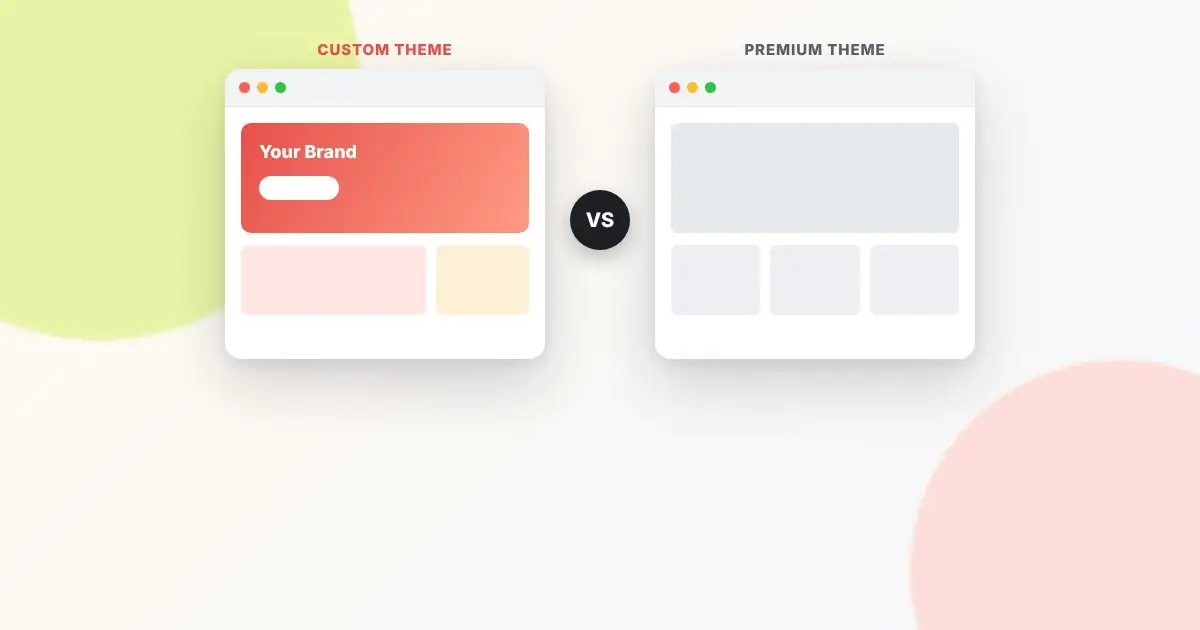
One of the first big decisions when building or rebuilding a Shopify store is the theme. Do you buy a premium theme from the Shopify Theme Store and customize it, or invest in a custom theme built specifically for your brand?
Both are valid choices. The right one depends on your budget, how established your business is and how much your store needs to stand out. Here’s an honest comparison.
What is a premium theme?
A premium theme is a ready-made design sold in the Shopify Theme Store, usually as a one-time purchase. You get a professional layout, a set of configurable sections and updates from the theme developer. Through the theme editor you can change colors, fonts, images and section order without touching code.
What is a custom theme?
A custom theme is designed and developed for your store specifically. It might be built from scratch or on top of a lightweight base such as Shopify’s Dawn, but the layout, sections and functionality are shaped around your products, your brand and your customers’ buying journey.
Side-by-side comparison
Upfront cost
Premium: Low. You pay for the theme, plus any setup or minor customization.
Custom: Significantly higher, because you’re paying for design, development and testing time.
Time to launch
Premium: Days to a couple of weeks.
Custom: Typically several weeks to a few months, depending on complexity.
Brand differentiation
Premium: Limited. Popular themes are used by thousands of stores, and shoppers can sometimes tell.
Custom: High. The store looks and feels like your brand rather than a template.
Performance
Premium: Varies. Many premium themes ship with every feature switched on to appeal to as many buyers as possible, which adds code you may never use.
Custom: Can be very lean, because it includes only what your store actually needs.
Functionality
Premium: You get what’s included. Anything extra usually means adding apps, each of which adds cost and page weight.
Custom: Features like product bundles, custom filters, size guides or B2B pricing displays can be built directly into the theme.
Ease of editing
Premium: Very easy. Everything is controlled through the theme editor.
Custom: Just as easy if it’s built well. A good developer builds editable sections and blocks so your team can update content without code.
Long-term maintenance
Premium: The theme developer releases updates, but heavy customizations can make updating difficult.
Custom: You own the code. Updates happen when you need them, either by your developer or your team.
When a premium theme is the right choice
- You’re launching a new store and need to validate products quickly.
- Your budget is limited and better spent on inventory or marketing right now.
- A premium theme already fits most of your needs with light customization.
- Your catalog is fairly standard, with straightforward products and variants.
When a custom theme is worth the investment
- Your store has steady revenue and you want to improve conversion rate. Small percentage gains add up quickly.
- Brand perception matters, for example in premium, fashion, beauty or lifestyle categories.
- You rely on several apps to patch gaps, and the store has become slow and fragile.
- You have unusual requirements: product customizers, complex bundles, wholesale portals or content-heavy product pages.
- You’ve outgrown your current theme and keep running into its limits.
The middle ground: a customized premium theme
For many growing stores, the best value is a well-chosen premium or free theme with targeted custom development. Keep the solid foundation, and have a developer build the few sections or features that matter most to your business, while removing what you don’t use. You get much of the benefit of a custom build at a fraction of the cost and time.
Questions to ask before you decide
- What specific problems does my current store have: speed, conversion rate, brand feel, missing features?
- Can those problems be solved with configuration and a few custom sections?
- How many apps am I paying for every month that a custom feature could replace?
- What is a one-percent conversion improvement worth to my business over a year?
The answers usually make the decision clear. If you’re unsure, talk to the AlhudaSols team. We build both custom Shopify themes and tailored premium-theme setups, and we’ll recommend whichever genuinely fits your store.
Frequently asked questions
Can I switch from a premium theme to a custom theme later?
Yes. Your products, customers, orders and most settings stay in Shopify when you change themes. Theme-specific content such as homepage sections will need rebuilding, but nothing in your store data is lost.
Will a custom theme improve my SEO?
It can, mainly through faster load times, cleaner code and better control over headings, structured data and internal linking. A theme alone won’t rank you, though. Content and authority still matter most.
Is a free theme good enough?
Shopify’s free themes, especially Dawn, are fast and well built. For many new stores they’re an excellent starting point, and they make a great base for custom development later.